


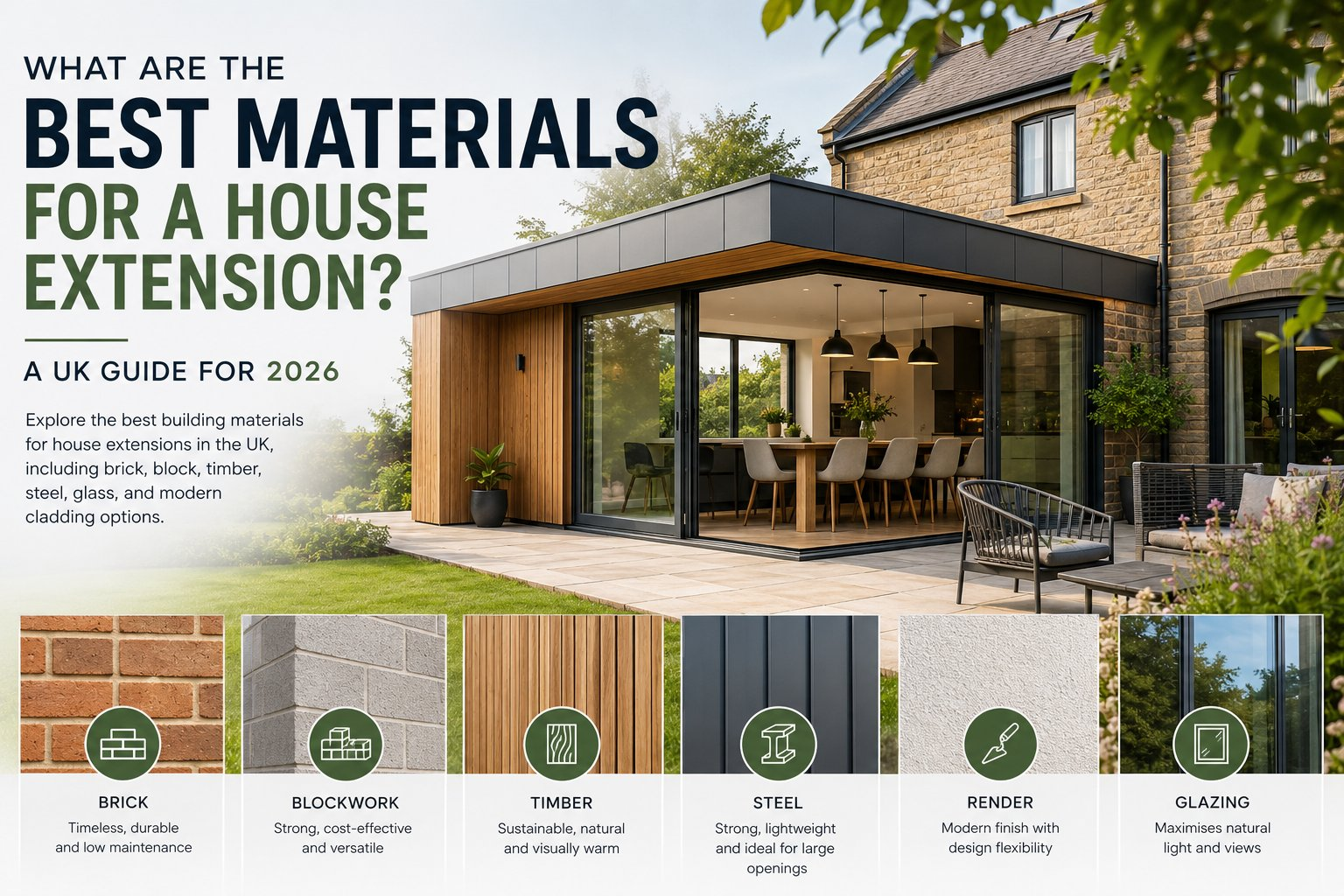
Choosing the right materials for a house extension isn’t just a technical decision — it shapes how your home looks, performs, and holds up over the years. Get it right and you’ll have a space that feels like it was always part of the house. Get it wrong and you’re looking at ongoing maintenance issues, poor insulation, and a finish that dates quickly.
For homeowners in London especially, where planning rules are stricter and properties tend to be older and more varied in style, the choice of construction materials deserves just as much thought as the layout or budget.
Brick — Still the First Choice for Most UK Extensions
It’s not hard to see why brick remains the go-to material for house extensions across the UK. It’s durable, weather-resistant, fire-resistant, and — crucially — it suits the vast majority of British homes, which were built in brick to begin with. Matching new extension bricks to the existing property is something most experienced UK building companies will do as standard, and it makes a real difference to the finished result.
Brick also requires remarkably little maintenance once it’s up. A well-built brick extension by reliable local building contractors can easily outlast the homeowner. Most professional contractors in North London and East London use cavity wall construction — brick on the outside, insulated blockwork on the inside — which satisfies modern thermal regulations without sacrificing appearance.
Concrete Blocks — the Workhorse Behind the Scenes
You probably won’t see concrete blocks once the job is done, but they’re doing a lot of the heavy lifting. Most house building companies use them for internal structural walls, load-bearing sections, and foundations — anywhere that needs reliable strength at speed.
Blockwork is resistant to both moisture and fire, which makes it well suited to the British climate. It’s also why so many building companies combine it with an external brick finish: you get the structural performance of concrete and the aesthetic of brick in one efficient system. Modern concrete materials have also improved considerably in terms of thermal efficiency compared to older mixes.
Timber Frame — Faster to Build, Excellent for Insulation
Timber frame construction has grown significantly in popularity, and for good reason. It’s quicker to erect than traditional masonry, which keeps labour costs down and reduces the time your home is a building site. Many new build contractors in London recommend it for rear extensions, garden rooms, and loft conversions where speed and performance both matter.
The insulation potential is particularly impressive. When combined with modern insulation systems, timber frame walls can achieve very high thermal efficiency — which translates to lower energy bills and a more comfortable home year-round. That said, it does need to be installed properly. Moisture management and structural integrity depend entirely on the quality of the workmanship, so choosing experienced residential construction companies is essential.
Structural Steel — Essential for Open-Plan Layouts
If you’re planning to remove a load-bearing wall or create a large open-plan space, structural steel beams will almost certainly be part of the build. RSJs (Rolled Steel Joists) are the standard solution, and they’re used by professional contractors across London to safely support upper floors and roof structures when walls come out.
The calculations for beam sizing are normally carried out by a structural engineer, and any reliable building firm will coordinate this as part of the project rather than leaving it to you to arrange separately. It’s not glamorous work, but it’s what makes those wide, light-filled kitchen extensions actually stand up.
Insulation — Non-Negotiable Under Current Building Regulations
UK building regulations now set high standards for insulation in any new extension, covering walls, roofs, and floors. This isn’t just a box-ticking exercise — proper insulation is what makes the difference between an extension that costs a fortune to heat and one that stays comfortable year-round.
Professional home building companies typically use rigid PIR boards, mineral wool, or insulated plasterboard depending on the application. The detail work matters enormously here: poor installation leads to thermal bridging (cold spots where heat escapes) and condensation, both of which cause long-term problems. Any good house building contractor will treat insulation as a priority rather than an afterthought.
Roofing — Matching the Right System to the Design
The roof often gets less attention than it deserves during the planning stage, but it has a significant impact on both waterproofing performance and how the extension looks.
For traditional pitched roofs, concrete or clay tiles are the standard choice and blend well with most British homes. Flat roof extensions — which are common in modern rear additions — are typically finished with EPDM rubber or GRP fibreglass systems, both of which offer excellent waterproofing and need very little maintenance. Many building contractors in East London also incorporate roof lanterns or skylights into flat roof designs, which can transform what might otherwise feel like a dark addition into a genuinely bright space.
Windows and Doors — Aluminium vs uPVC
The choice of glazing system affects both the look of the extension and its energy performance. Aluminium has become increasingly popular in modern extensions — it offers slim sight lines, a contemporary appearance, and excellent longevity. It tends to cost more than uPVC, but many homeowners consider it worth the investment for the finish it gives.
uPVC remains a solid, more affordable option and still performs well thermally. Bifold and sliding doors are particularly popular for rear extensions, creating a strong connection between the kitchen or living area and the garden — especially useful in the warmer months.
Experienced building contractors in North London can help you weigh up the options based on your budget and the style of the existing property.
Sustainable Materials — Increasingly Standard, Not Just a Trend
Eco-friendly construction is no longer a niche preference. Many modern building companies now use recycled insulation, sustainably sourced timber, and low-carbon concrete as a matter of course. These materials reduce environmental impact without compromising structural performance, and they’re becoming more widely available and competitively priced.
For homeowners who want to reduce the carbon footprint of their build, it’s well worth raising this with your contractor early — there are usually sustainable alternatives for most elements of an extension.
Getting the Material Choice Right
There’s no universal answer to which materials are best — it depends on your property, your budget, the design, and what you’re trying to achieve structurally and aesthetically.
What does make a consistent difference is working with experienced local building contractors who understand how different materials behave together and what’s required to meet UK building regulations. Quality materials and skilled workmanship aren’t interchangeable — you need both.
Whether you’re planning a traditional brick addition or a modern open-plan extension with glazed doors and a flat roof, the materials you choose will determine how well the space performs and how long it lasts. It’s worth getting that decision right from the start.